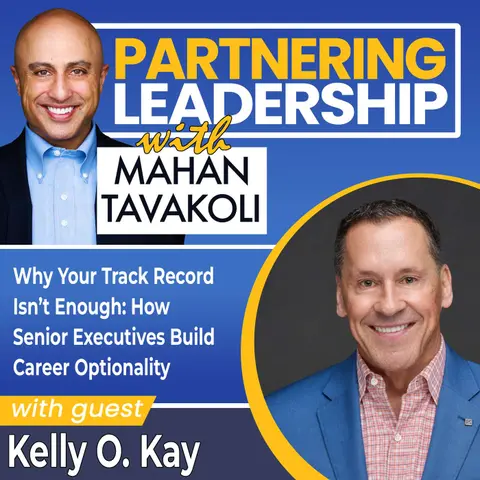
Why Senior Executives Fail at Career Optionality (And How to Build It)
Senior executives often spend decades refining corporate strategy, optimizing talent pipelines, and allocating capital, while giving virtually zero strategic thought to their own career trajectory. This critical blind spot leaves high-performing leaders vulnerable to sudden market shifts, limiting their choices when they finally decide it is time for a change. True career optionality is not an accident; it is the result of intentional, ongoing cultivation that begins long before a transition is ever on the horizon.
Key Takeaways
- Most executives rely on a linear career progression assumption, bringing zero strategic rigor to their own career management until they are forced to make a transition.
- True optionality is built years in advance through brand reputation and ongoing network cultivation, long before an executive search partner ever picks up the phone.
- Treating executive interviews as a sales pitch rather than a substantive executive dialogue immediately signals a lack of self-awareness and strategic altitude.
- Acknowledging capability gaps and asking for executive coaching during negotiations demonstrates maturity and eliminates risk for prospective board members and investors.
The Trap of the Linear Career Assumption
When younger professionals enter the workforce, they are often hyper-aware of the need to network, build skills, and manage their professional brand. However, as leaders climb the corporate ladder into the C-suite, a dangerous complacency sets in. They assume that their current performance speaks for itself and that their career progression will remain linear and predictable.
This assumption breaks down in today's fast-moving business environment. Because no business school or graduate program teaches the mechanics of managing a career transition, most executives default to a reactive posture. They wait for a recruiter's call, evaluate the opportunity through a narrow transactional lens, and dismiss roles simply because they are not actively looking to leave their current seat. By treating career management as a sporadic event rather than an ongoing discipline, executives forfeit the leverage that comes from having genuine choices.
How Market Reputation Shapes Unseen Opportunities
Career optionality is fundamentally about what the market says about you when you are not in the room. Many senior leaders operate under the illusion that their immediate track record is the only metric that matters to a hiring committee or a private equity board.
In reality, executive search partners and board subcommittees track leadership reputations over decades. An unresolved conflict or a poor impression left twenty years earlier can quietly eliminate an executive from consideration for a premier role before their name is even publicly discussed. Building optionality requires treating every professional interaction with long-term care. Your brand is not what you say it is on LinkedIn; it is the cumulative experience of every colleague, investor, board member, and competitor who has ever worked alongside you.
Re-framing the Recruiter Call as a Strategic Tool
When an executive search consultant reaches out about a new role, the typical response is binary: do I want this job right now, or should I decline the meeting to save everyone time? This transactional mindset destroys optionality.
Instead, senior leaders should view introductory calls and exploratory interviews as low-risk opportunities to expand their strategic worldview. Taking a meeting for a role you have no intention of accepting allows you to:
- Build direct relationships with influential board directors and high-quality investors.
- Gain deep fluency in how different industries and business models operate at a higher altitude.
- Understand how the broader market perceives your current capabilities and track record.
- Practice thinking and communicating at the CEO or board level before the stakes are personal.
Shifting From Sales Pitch to Executive Dialogue
When executives finally enter a formal hiring process, many fall back on an outdated playbook. They treat the interview as a legacy question-and-answer session where they must sell their past accomplishments as guaranteed proof of future success.
Boards do not hire past resumes; they hire future problem-solvers. Attempting to lift and transplant what you did at your last company directly into a new organization rarely works because every business context is entirely unique. Successful candidates pivot the dynamic from a sales pitch to a substantive executive dialogue. They bring original ideas about the business, demonstrate intellectual curiosity, and show the board precisely how they think through complex, ambiguous challenges.
The Power of Intellectual Honesty and Self-Awareness
One of the most counterintuitive aspects of senior-level hiring is the role of vulnerability. Many leaders feel compelled to project an image of absolute perfection, claiming they have no blind spots or capability gaps across any functional domain.
This posture often backfires. Experienced investors and board members know that no leader is a universal expert. When a candidate articulates their core strengths while clearly identifying the complementary capabilities and support systems they will need around them, it signals profound self-awareness. Admitting where you need augmentation does not make you look weak; it eliminates rookie risk, builds immediate trust, and proves you are grounded enough to build a truly high-performing leadership team.
Building Resilience Before You Need It
Career optionality is an insurance policy that must be funded when times are good. Waiting until you are frustrated with your current role, misaligned with your CEO, or facing organizational restructuring to start building a network is a recipe for compromised decisions.
By shifting your perspective today—treating your career as an ongoing portfolio of relationships, continuously testing your market value, and refusing to put your leadership story on autopilot—you ensure that when the right opportunity eventually materializes, you are not scrambling to catch up. You are simply stepping into a future you have spent years preparing to lead.
To explore these insights further and learn practical frameworks for landing the leadership role you want, listen to the full episode with Kelly O. Kay. Subscribe to Partnering Leadership for more candid conversations with top global thinkers, CEOs, and executive search leaders designed to help you think more clearly about what is coming next for your organization and your career.
Frequently Asked Questions
Why do senior executives fail to manage their own careers effectively?
Senior executives spend decades mastering business strategy, capital allocation, and organizational performance, yet receive zero formal training in career management. Many operate under the false assumption that good work alone is enough, or that someone else inside their company or network is looking out for their trajectory.
What creates true career optionality for C-suite leaders?
Optionality comes from maintaining ongoing relationships with executive search consultants, industry peers, and board members when you have no intention of leaving your current role. Taking exploratory meetings allows you to learn new industries, understand how the market views you, and build fluency at higher leadership altitudes.
How should senior leaders approach executive interviews differently?
Instead of viewing an interview as a legacy question-and-answer session or a sales pitch to prove you can do the job, leaders must treat it as an executive dialogue. This means demonstrating how you think, sharing specific ideas for the business, and showing intellectual honesty about what you bring to the table.
Does admitting a weakness or capability gap hurt a candidate during executive hiring?
No. Attempting to portray perfection or claiming zero blind spots signals a lack of self-awareness. Articulating the specific complementary capabilities and support you need demonstrates maturity, lowers risk for investors, and builds immediate credibility with hiring boards.
Why AI Brain Drain is Threatening Executive Decision-Making