Goal-Induced Blindness: Why High-Performing Leaders Sacrifice Results for Metrics
Goal-induced blindness happens when executives and high-performing teams become so hyper-focused on measurable targets that they overlook critical areas like ethics, well-being, and process quality. While metrics drive alignment, neglecting the blind spots they create risks long-term organizational success, personal health, and sustainable growth.
Key Takeaways
- Measurable goals provide necessary focus and alignment, but they carry hidden psychological and operational side effects.
- Goal-induced blindness causes leaders and high performers to sacrifice relationships, physical health, and ethics to hit targets.
- Famous corporate failures, such as Wells Fargo's account scandals, stem directly from flawed metric prioritization.
- Balancing an ego orientation with a mastery orientation helps teams focus on continuous process improvement over raw scores.
- Rest and recovery are non-negotiable operational requirements that outperform chronic overwork in high-stakes environments.
Understanding Goal-Induced Blindness in the C-Suite
High-performing organizations thrive on clear metrics. From quarterly revenue targets to operational KPIs, numbers dictate success. However, human psychology introduces a hidden trap. When an objective becomes all-consuming, cognitive tunnel vision takes over. Leaders stop seeing the broader ecosystem of their business.
This phenomenon is not limited to mid-level management. In fact, ultra-high performers are often the most susceptible because their identity is tied to achievement. Whether it is an elite mountaineer stepping over frozen bodies to reach a summit or a corporate executive pushing a team past exhaustion, the singular obsession with the outcome clouds basic judgment. The metric becomes the master rather than the tool.
The True Costs of Metric Obsession
When organizations optimize solely for a scorecard, unintended consequences multiply. People cut corners. Collaboration deteriorates as internal competition spikes. Most dangerously, ethical boundaries begin to blur because the pressure to deliver overshadows how the results are achieved.
Shifting from Ego to Mastery
One of the most effective antidotes to goal-induced blindness is shifting the organizational mindset from ego orientation to mastery orientation. While ego orientation focuses strictly on the scoreboard or the immediate win, mastery orientation concentrates on the quality of the process.
Consider the difference in high-stakes environments. If a team's only goal is to close a specific number of sales, representatives may resort to high-pressure tactics that damage long-term client retention. If the goal shifts to mastering the consultative sales process, performance stabilizes and improves organically over time. Excellence is a byproduct of refining the day-to-day mechanics of the work.
Interrogating Success as Aggressively as Failure
Leaders readily conduct post-mortems when a project fails. True leadership excellence requires the same rigorous interrogation when a project succeeds. Winning with a flawed process breeds dangerous overconfidence. By examining the mechanics behind both wins and losses, executives build genuine resilience and better decision-making capabilities under uncertainty.
Rejecting Chronic Overwork for Sustainable Performance
Many executives wear chronic sleep deprivation and non-stop work schedules like a badge of honor. Psychological and physiological research dismantling this mindset is unequivocal. Impaired cognitive function from exhaustion mirrors the effects of being legally impaired.
Sustainable high performance requires strategic rest. Elite athletes understand that recovery is where physical adaptation occurs. Business leaders must apply the same discipline to cognitive stamina. A well-rested, mentally sharp team will consistently outperform an overworked, burned-out competitor. Protecting physical health and mental acuity is a core strategic responsibility, not a luxury.
Conclusion
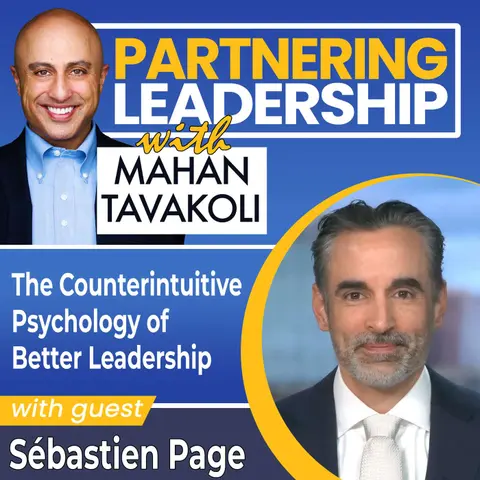
Navigating the pressures of enterprise leadership requires constant vigilance against the cognitive traps of metric obsession. By prioritizing mastery over pure ego and protecting the well-being required for sustainable focus, leaders can drive exceptional results without sacrificing their organizations or themselves. To explore these counterintuitive principles further, Listen to the full episode of Partnering Leadership with Sébastien Page for deep insights on executive psychology and decision-making.
Frequently Asked Questions
What is goal-induced blindness in leadership?
Goal-induced blindness occurs when leaders and teams become so fixated on achieving specific, measurable targets that they ignore non-goal areas, including health, relationships, ethics, and process quality.
How does a mastery orientation differ from an ego orientation?
An ego orientation focuses exclusively on the final score or outcome, often at all costs. A mastery orientation focuses on continually improving the underlying process and skills required to do the work well.
Why do high performers struggle more with rest and recovery?
High performers often tie their self-worth directly to continuous achievement, making them more vulnerable to the belief that chronic overwork and self-sacrifice are necessary for success.
How can executives counteract metric-driven tunnel vision?
Executives can combat tunnel vision by interrogating successful outcomes just as rigorously as failures, balancing quantitative KPIs with qualitative process assessments, and prioritizing cognitive recovery.

How Physical Office Environments Sabotage Employee Agency and Culture