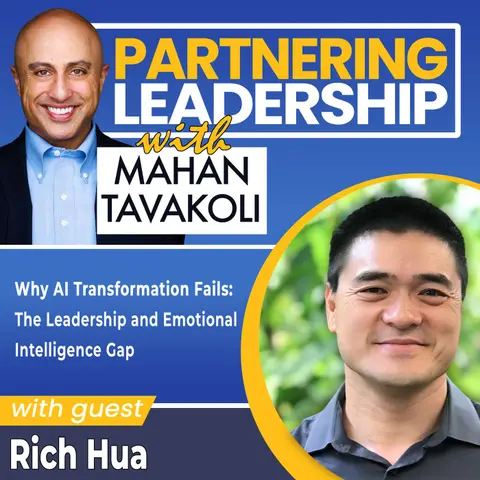
Why AI Transformation Fails Without Emotional Intelligence in the C-Suite
Enterprise artificial intelligence transformation frequently stalls not because the underlying technology is flawed, but because executive leadership fails to address the emotional and cultural friction of human change. When organizations invest heavily in advanced algorithms while neglecting empathy, trust, and emotional intelligence, employees perceive threats rather than opportunities, ultimately derailing strategic execution.
Key Takeaways
- Up to 96 percent of enterprise AI transformation efforts struggle because organizations treat adoption as a technology challenge rather than a human adaptability challenge.
- Employees frequently view AI rollouts as threats to job security, with recent data showing nearly a third of workers admitting to sabotaging company AI initiatives.
- Building a successful AI-enabled organization requires balancing high IQ technical execution with emotional intelligence, cultural alignment, and authentic trust.
- Leaders must develop negative capability—the ability to sit with uncertainty and resist premature, fear-driven decisions during rapid technological change.
The Human Disconnect in AI Strategy
Senior executives are under intense pressure from boards of directors and market competitors to accelerate artificial intelligence adoption. Armed with impressive metrics and comprehensive technical roadmaps, leadership teams often assume that issuing clear directives will naturally result in organization-wide execution. However, this top-down approach overlooks a fundamental psychological reality.
While executives focus on efficiency, productivity gains, and margin expansion, front-line employees often hear a very different message: their roles are being optimized away. When change initiatives ignore the basic human motivation for career survival and professional stability, they invite skepticism rather than engagement. Research indicates that a significant percentage of workers admit to quietly or actively resisting corporate AI initiatives when they feel alienated from the strategy.
This dynamic creates a dysfunctional three-legged race. Leaders are sprinting toward a technological future while employees are holding back out of self-preservation. Closing this gap requires shifting the focus from mere software deployment to genuine organizational alignment.
Treating Emotions as Critical Data Points
In analytical, hyper-logical corporate environments, emotional intelligence is frequently dismissed as soft or irrelevant. Yet, in high-stakes transformation initiatives, emotions function as vital data points. Understanding what employees and customers are feeling is essential for accurate forecasting, risk assessment, and change management.
When leaders ignore the psychological and emotional landscape of their workforce, they miss crucial signals about organizational readiness. Successful transformation demands that leaders stop treating human reactions as obstacles to be overcome and start treating them as indicators to be understood. Empathy is not the absence of rigor; it is the prerequisite for effective execution in complex environments.
The Danger of Cognitive Offloading
As artificial intelligence becomes a seamless collaborator in the workplace, executives face a secondary risk: the degradation of human capabilities. Because AI tools are always available, agreeable, and non-judgmental, professionals may over-rely on them for complex reasoning, conflict resolution, and self-awareness.
Treating advanced language models as infallible advisors creates a false sense of security. AI lacks lived experience, moral agency, and genuine judgment. When leaders offload critical thinking entirely to technology, they risk eroding the interpersonal skills and self-awareness required to lead people through ambiguity.
Cultivating Negative Capability Under Pressure
The relentless pace of technological advancement induces unprecedented anxiety in the C-suite. Under extreme pressure to deliver results, executives often feel compelled to make immediate, definitive decisions about tools, platforms, and structural reorganizations.
However, effective leadership in an AI-driven era requires developing negative capability—the psychological stamina to operate without immediate answers. Leaders who panic and issue premature mandates often destabilize their organizations further. Those who can sit comfortably with uncertainty, run disciplined experiments, and invite collaborative problem-solving are far more likely to build resilient, adaptable enterprises.
Practical Steps for Executive Leaders
Transforming an organization's relationship with technology requires deliberate, daily leadership behaviors. Executives looking to bridge the emotional intelligence gap can implement targeted exercises to improve self-awareness and accountability.
One proven method is the feed-forward approach. Rather than relying solely on backward-looking performance reviews, leaders can ask five to seven trusted colleagues for forward-looking suggestions on specific leadership dimensions, such as empathy or communication. By listening without defensiveness, acting on recurring patterns, and inviting peers to hold them accountable, executives model the exact behavioral adaptability they expect from their teams.
Conclusion
Technology alone will never be the ultimate differentiator in the modern marketplace. Because algorithms and enterprise platforms can be easily replicated by competitors, true competitive advantage stems from human adaptability, culture, and emotional resonance. Bridging the gap between technological ambition and human execution is the defining leadership challenge of our time.
To explore these insights in greater depth and hear strategies for building resilient organizational cultures, Listen to the full episode of Partnering Leadership.
Frequently Asked Questions
Why do most corporate AI transformation initiatives fail?
Most AI transformation efforts fail because executive teams focus exclusively on technical implementation and software deployment while ignoring the human side of change. When employees feel threatened by job displacement without proper communication and empathy, adoption stalls or encounters active resistance.
How does emotional intelligence impact data-driven decision-making?
Emotions serve as critical data points in complex business environments. Leaders who ignore team morale, employee anxiety, or customer reactions during strategy execution operate with blind spots that can undermine even the most sophisticated analytical models.
What is negative capability and why do executives need it during AI adoption?
Negative capability is the leadership ability to operate comfortably without immediate answers and sit with uncertainty. In fast-moving technological landscapes, executives with high negative capability avoid premature, panic-driven decisions and allow thoughtful strategies to emerge.
How can leaders build trust during major technological shifts?
Leaders build trust by actively listening to workforce concerns, aligning new initiatives with internal human motivations rather than rigid edicts, and modeling self-awareness and transparency from the top down.
How to Reduce Team Thought Load and Stop Rewarding Toxic Busyness