Turn the Ship Around: Fostering Ownership Instead of Compliance
The Trap of Compliance in Modern Organizations
Think about your typical organization today. Meetings are filled with nodding heads. Direct reports wait for approval before taking action. Employees ask, "What do you want me to do?" rather than stating, "Here is what I intend to do." On the surface, this might look like a well-oiled machine. It looks like order, discipline, and alignment. But beneath that veneer of stability lies a dangerous vulnerability: compliance.
Compliance is cheap, and it is comfortable. It allows leaders to feel in control because every decision funnels upward through them. When a mistake happens, it is easy to point the finger at the person at the top who gave the order. But compliance has a devastating hidden cost. It destroys initiative, stifles creativity, and paralyzes the organization the moment the leader is not in the room. When you build a culture of compliance, you are essentially training your people to check their brains at the door. You are telling them that their primary value lies in their hands and feet, not their minds.
In a rapidly changing business environment, a command-and-control structure is a liability. No single leader—no matter how brilliant, experienced, or well-intentioned—can possibly process all the information required to make every critical decision. When leaders try to be the intellectual hub of the entire enterprise, they create massive bottlenecks. Information moves slowly, innovation stalls, and burnout skyrockets at the top while disengagement spreads at the bottom. To build an organization that can thrive in complexity, we must abandon the pursuit of compliance and replace it with something infinitely more powerful: psychological ownership.
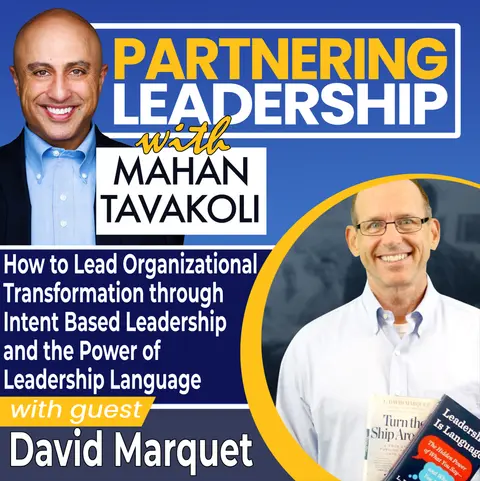
Lessons from L. David Marquet and Turn the Ship Around
There is perhaps no better illustration of the failure of compliance and the triumph of ownership than the story of L. David Marquet and the USS Santa Fe. As chronicled in his bestselling book, Turn the Ship Around!, Marquet took command of the worst-performing nuclear submarine in the United States Navy. Morale was at rock bottom, retention was abysmal, and the crew was entirely demoralized by a toxic command-and-control environment.
To make matters worse, Marquet had spent a year preparing to take command of a completely different submarine, only to be reassigned to the USS Santa Fe at the last possible moment. He did not know the specific technical systems of this boat as well as he knew the other. Under the traditional leadership model, this would have been a recipe for disaster. A traditional leader would have felt compelled to fake expertise, bark orders, and micromanage every detail to compensate for their lack of familiarity.
Instead, Marquet realized that the old way of leading was not only unsustainable; it was dangerous. He decided to flip the script. He stopped giving orders and started giving control. Rather than telling his officers what to do, he required them to state what they intended to do. He shifted the organizational dynamic from "I tell you, you do" to "You think, you decide, you own."
The results were legendary. The USS Santa Fe went from being the worst-performing submarine in the fleet to the absolute best. More importantly, long after Marquet left the ship, it continued to produce an extraordinary number of admirals and commanding officers. By changing the leadership model, Marquet did not just fix a single ship; he created a sustainable engine for leadership development. His journey provides a masterclass for modern executives who want to achieve similar breakthroughs in their own organizations.
Shifting from Followers to Autonomous Thinkers
To replicate the success of the USS Santa Fe in your own organization, you must first understand the fundamental shift required in how you view your team members. Most corporate structures are deliberately designed to create followers. Job descriptions outline narrow responsibilities, performance reviews measure adherence to pre-set metrics, and approval workflows reinforce dependency on senior management.
Moving from a culture of followers to a culture of leaders requires a radical redesign of your mental models. Autonomous thinkers do not wait for permission to solve problems. They do not view challenges as someone else's responsibility. When they see a broken process, a customer friction point, or an untapped opportunity, they lean in and take responsibility.
This shift requires leaders to let go of the ego-driven need to have all the answers. Many leaders struggle with this because their identity and past promotions were built on being the smartest person in the room who could solve any technical problem. But as you ascend to higher levels of leadership, your job is no longer to do the work or even to solve the problems. Your job is to build an environment where the people closest to the work can solve the problems effectively and rapidly.
When you empower autonomous thinkers, you unlock the collective intelligence of your entire workforce. Instead of relying on the cognitive capacity of a handful of executives at the top, you harness the diverse perspectives, creative insights, and frontline experiences of every single employee. That is how you build an agile, resilient organization.
Practical Strategies for Fostering True Ownership
Transforming leadership philosophy from command-and-control to ownership-driven is easy to talk about in theory, but how do you actually execute it on Monday morning? Here are several practical strategies inspired by L. David Marquet's work and refined through conversations with top-tier leadership thinkers:
1. Adopt the "I Intend To" Framework
Ban the phrase "What should I do?" from your organization. When a team member comes to you with a problem and asks for your direction, gently pause the conversation and ask them: "What do you intend to do?" This simple conversational shift moves the cognitive burden back onto the person who is closest to the issue. Initially, you may encounter hesitation or deer-in-the-headlights looks because people are unaccustomed to having their opinions valued in that way. Be patient, support their thinking, and validate their initiatives. Over time, employees will stop bringing you problems to solve and will instead bring you well-thought-out solutions ready for your blessing.
2. Push Authority to Information, Not Information to Authority
In traditional hierarchies, information flows upward to the decision-maker. By the time information travels through multiple layers of management, it is often delayed, sanitized, or completely distorted. To foster ownership, you must reverse this flow. Push authority down to where the information already lives. Give frontline employees the power, tools, and budget to make decisions that impact their daily work and customer interactions. When people have the authority to make decisions, they naturally develop a deep sense of ownership over the outcomes.
3. Frame Decisions Around Intent, Not Mechanics
When delegating tasks or setting strategic goals, resist the urge to tell your team *how* to accomplish them. Instead, focus entirely on *what* you are trying to achieve and *why* it matters. Explain the broader context, the organizational goals, and the guardrails. When people understand the "why" behind an initiative, their creative problem-solving abilities kick in. They will often find faster, smarter, and more innovative ways to reach the destination than you could have ever prescribed.
4. Cultivate Psychological Safety and Embrace Intelligent Failure
You cannot have ownership without psychological safety. If your team fears that making a mistake will result in public humiliation, blame, or career stagnation, they will instantly retreat into safe, compliant behavior. They will hide problems, avoid risks, and wait for explicit orders to cover themselves. To foster true ownership, you must reframe mistakes as learning opportunities. When an initiative fails, resist the urge to ask "Who did this?" Instead, ask "What broke in our process, and what can we learn from this?" Celebrate intelligent risks and ensure that failures are met with curiosity rather than retribution.
Conclusion: Building a Culture Ready for the Future
The challenges facing leaders today are more complex, ambiguous, and fast-moving than ever before. In an era defined by rapid technological disruption, shifting economic landscapes, and evolving employee expectations, the old command-and-control playbook is completely obsolete. Trying to manage modern professionals through fear, micromanagement, and compliance is like trying to navigate a digital world with a paper map. It simply will not work.
True leadership is not about building followers who wait for your instructions. It is about creating an environment where everyone feels empowered to think critically, act decisively, and take complete ownership of their work. By decentralizing authority, shifting from permission-seeking to intention-stating, and building a culture rooted in psychological safety, you can transform your organization into a resilient engine of innovation and leadership.
If you are ready to dive deeper into these transformative concepts and discover how to reset your leadership approach for the modern era, I encourage you to listen to the full conversation. Check out episode 464 [Leadership Reset] Turn the Ship Around: Creating Leaders Instead of Followers with L. David Marquet. Spend some time wrestling with these ideas, reflect on your own leadership habits, and start turning your ship around today.
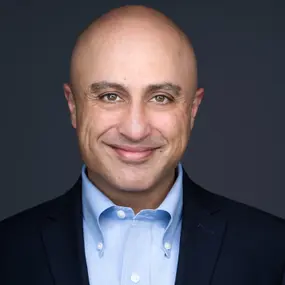
Strategic Advisor to CEOs & Boards | Host, Partnering Leadership
Mahan Tavakoli is a strategic advisor to CEOs, boards, and executive teams, working with them on strategy, reinvention, leadership, organizational effectiveness, and the implications of AI for how organizations create value and operate.
Earlier in his career, Mahan spent more than 20 years with Dale Carnegie, where he led operations and strategy and helped drive international expansion across more than 90 countries.
Today, his work with senior leadership teams is complemented by more than 450 conversations on the Partnering Leadership podcast with CEOs, founders, researchers, futurists, and leading thinkers on strategy, organizations, leadership, and AI.
Across both his advisory work and the podcast, Mahan focuses on a central question: What is possible now that was not possible before, and what do organizations need to rethink to make it real?
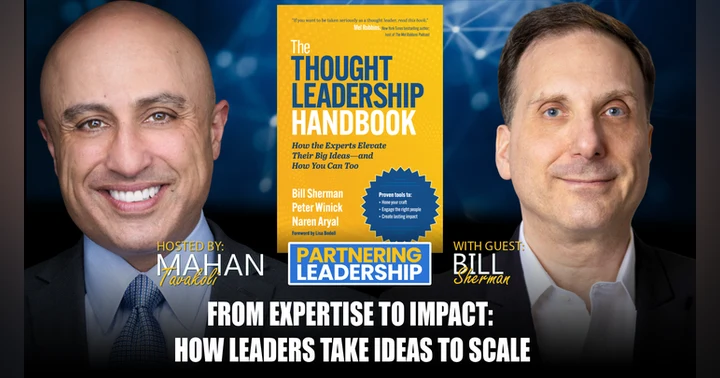
How to Build Thought Leadership Without Creating AI Slop
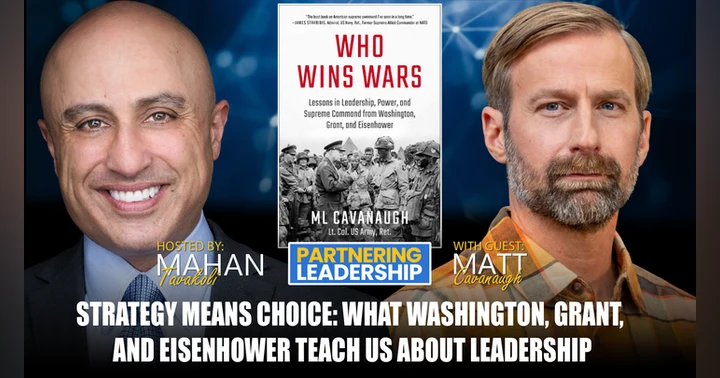


![464 [Leadership Reset] Turn the Ship Around: Creating Leaders Instead of Followers with L. David Marquet](https://img.podpage.com/FV5WNac6oiY1OPhZqkViALZHktQ7CkA2s769ezbAmqc/rs:fit:480:0:1/q:75/aHR0cHM6Ly9zdG9yYWdlLmJ1enpzcHJvdXQuY29tL3AybHl0cnQ3OWJwcHNwY2V1ZG1heDVhcGo0bnk_LmpwZw.webp "464 [Leadership Reset] Turn the Ship Around: Creating Leaders Instead of Followers with L. David Marquet")