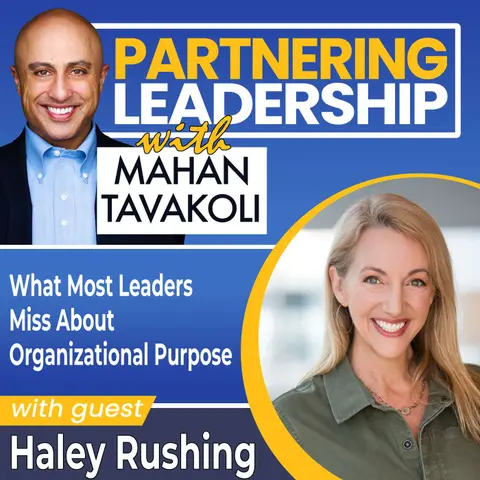
Why Organizational Purpose Fails Without Authentic Leadership Intent
When enterprise leaders treat organizational purpose merely as a financial lever or public relations exercise, transformation efforts inevitably stall. True purpose-driven leadership requires absolute sincerity, shifting the focus from outside-in branding to inside-out operational alignment that withstands changing market pressures and leadership transitions over decades.
Key Takeaways
- Purpose-driven strategies fail when leaders adopt them solely to improve financial performance rather than as a core moral commitment.
- Enduring organizational purpose acts as a stable anchor, providing clarity on what will not change while allowing operational methods to evolve.
- Frontline employees often possess a deeper, more grounded understanding of local community impact than executives working exclusively in the boardroom.
- A timeless organizational purpose should remain durable for decades, serving as an everyday decision filter for resource allocation and strategic choices.
The Trap of Outside-In Purpose Statements
Most corporate executives can easily recite their organization's purpose statement from memory. It adorns lobby walls, populates recruitment brochures, and features prominently on corporate websites. Yet, a striking disconnect exists between articulated aspiration and operational reality. Many companies fall into the trap of developing purpose statements from an outside-in perspective, asking the fundamental question: What do we need to say to get customers and stakeholders to love us?
This approach mirrors traditional consumer marketing, where messaging is crafted to project an appealing image rather than reflect an authentic internal reality. When purpose is treated as a superficial branding exercise, it lacks the foundational integrity required to survive rigorous business challenges. Organizations that rely on purpose as a marketing veneer quickly lose their way when market conditions shift or economic pressures mount.
Sincerity is not merely a nice-to-have attribute for leadership teams; it is the absolute prerequisite for operational sustainability. Leaders who view purpose solely through the lens of return on investment rarely build the internal resilience needed to make difficult sacrifices. True purpose requires a moral foundation where decisions are made because they are the right way to treat people and operate a business, with high performance emerging as a natural byproduct rather than the primary manipulation tactic.
Translating Purpose Into Hard Strategic Choices
A genuine organizational purpose must serve as a rigorous decision filter for enterprise leaders. When an enterprise claims to stand for a specific difference in the world, that stance must inform difficult choices regarding brand portfolios, capital allocation, and operational pivots. Without these hard trade-offs, purpose remains toothless.
Consider how major global enterprises translate purpose into consequential actions:
- Abolishing Conflicting Revenue Streams: When CVS health defined its purpose as putting America on a path to health, leadership recognized that continuing to sell tobacco products directly undermined that mission. Despite costing billions in revenue, they eliminated tobacco sales to maintain institutional integrity.
- Portfolio Pruning and Alignment: VF Corporation articulated a purpose focused on powering sustainable active lifestyles. This strategic clarity prompted leadership to divest from traditional apparel lines and acquire brands genuinely aligned with outdoor and active movement.
- Operational Relocation: To live out its commitment to active lifestyles, VF Corporation moved its corporate headquarters from North Carolina to Colorado, placing itself directly within the epicenter of the communities it aimed to serve.
These examples illustrate that purpose-driven leadership is not about inspirational rhetoric. It is about having the courage to prune away legacy operations, divest from profitable yet misaligned business lines, and redirect capital toward areas that genuinely fulfill the organization's core promise.
Bridging the Boardroom and the Frontline Perspective
Defining an organization's purpose cannot happen in isolation behind executive boardroom doors. While senior leaders possess a macro view of market dynamics and strategic positioning, frontline employees often hold vital insights into the day-to-day impact of the business on local communities and ecosystems.
When global mining organizations attempt to articulate their purpose, executive leaders naturally gravitate toward high-level economic contributions, such as supplying essential copper and zinc for decarbonization and electric vehicles. While entirely accurate, this macroeconomic viewpoint can miss the deeply personal, localized stakes experienced by the workforce.
Frontline miners and local operational teams care deeply about environmental stewardship, personal safety, and being responsible neighbors in the regions where they have lived for generations. By engaging in a leader-led, grassroots-spread discovery process, organizations uncover a more complete and resonant purpose statement. When a mining company incorporates commitments to local land, community care, and shared responsibility into its core identity, it engages the hearts and minds of the people executing the work every single day.
Timeless Identity Versus Timely Execution
A common executive mistake is confusing the enduring identity of an enterprise with outdated operating models. Leaders often struggle to distinguish between 'this is who we are' and 'this is simply how we have always done things.' Navigating this tension requires separating timeless purpose from timely execution.
An organization's purpose should be durable for decades. It provides a stable anchor point in a volatile business environment, reassuring employees and stakeholders about what will not change. This psychological safety net liberates teams to embrace rapid operational changes and technological innovations.
For instance, Charles Schwab maintained a singular, enduring purpose: to be a relentless ally for the individual investor. However, the operational execution—the how—evolved dramatically across decades. From low-cost brokerage models in the 1970s to mutual fund marketplaces, digital trading platforms, and unconflicted advice in subsequent decades, the tactical approach constantly adapted while the core purpose remained completely untouched. Being overly timely makes a company rootless, while being overly timeless without adaptation turns it into a museum. True enterprise agility lives in mastering this balance.
Conclusion
Organizational purpose is not a decorative statement to place on corporate walls or a transient marketing campaign designed to boost quarterly sentiment. It is an uncompromising foundation for capital allocation, strategic trade-offs, and operational evolution. Enterprise leaders who embrace authenticity and rigorous alignment will build resilient organizations capable of enduring across generations.
To explore these insights further and hear the complete conversation on navigating organizational purpose and leadership strategy, Listen to the full episode of Partnering Leadership with Mahan Tavakoli and Haley Rushing.
Frequently Asked Questions
What is the difference between outside-in and inside-out organizational purpose?
Outside-in purpose focuses on crafting messaging that makes customers and stakeholders prefer a brand, often leading to disingenuous positioning. Inside-out purpose starts with authentic foundational principles and a genuine commitment to making a positive difference, which then naturally guides business models and strategic choices.
How often should an enterprise revisit its organizational purpose?
Unlike three-to-five-year strategic plans, a well-defined organizational purpose should be timeless and durable, lasting for decades. It provides a stable anchor during market shifts, though major leadership transitions or foundational business pivots may prompt a rigorous review to ensure ongoing alignment.
Why do purpose-driven initiatives often fail to influence strategic decisions?
Purpose initiatives typically fail when leaders adopt them strictly as a financial performance lever rather than a core moral commitment. Without genuine executive sincerity and a willingness to make difficult trade-offs, purpose remains isolated from resource allocation and operational planning.
How can leaders involve frontline employees in defining organizational purpose?
Leaders can engage frontline workers through a grassroots-spread discovery process that gathers perspective beyond the C-suite. Frontline employees often hold critical insights regarding local community impact, environmental stewardship, and everyday operational realities that executives might overlook.